Handy Sensor - List of Manufacturers, Suppliers, Companies and Products | IPROS

Handy Sensor Product List

1~11 item / All 11 items

Displayed results

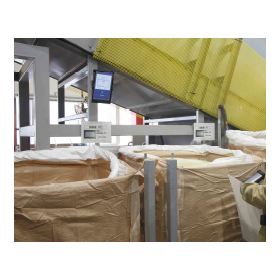
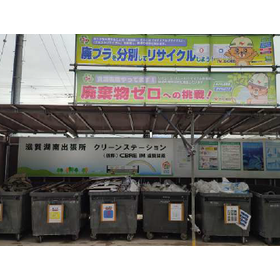
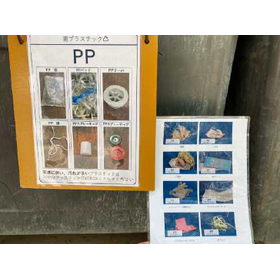
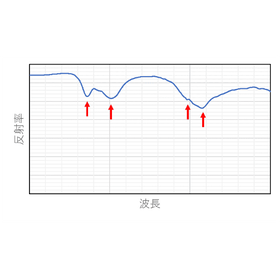
[Use Case] Identification of waste plastic from scrap and leftover materials generated by our factory.

Proper sorting of our company's waste can also serve as a way to appeal to our commitment to the environment!

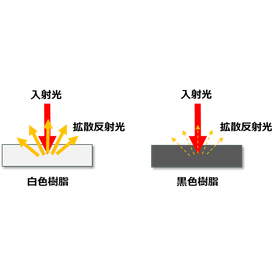
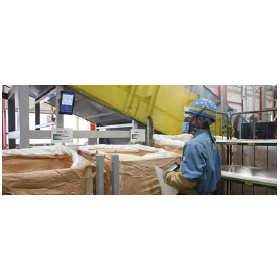
We would like to introduce a case study utilizing the "Resin Discrimination Handy Sensor" for the identification of waste plastics from scrap materials and offcuts. In this case, waste materials generated in our own factory and offcuts produced during the manufacturing process are being disposed of collectively, leading to a lack of proper sorting. By sorting the waste materials and offcuts, they can be handed over to intermediate processing companies, reducing processing costs and allowing for valuable transactions. [Case Overview] ■ Target Companies: Plastic product manufacturers, package printing manufacturers, electronics manufacturers ■ Issue: Collective disposal of waste materials and offcuts, neglecting sorting ■ Effect: Sorting materials that should be discarded, resulting in cost savings of several million yen *For more details, please refer to the PDF document or feel free to contact us.

  • Other resource recycling
  • Other analytical equipment
  • Handy Sensor

Added to bookmarks

Bookmarks list

Bookmark has been removed

Bookmarks list

You can't add any more bookmarks

By registering as a member, you can increase the number of bookmarks you can save and organize them with labels.

Free membership registration

[Case Study] Strengthening Quality Control with Sensor Utilization! Takeda Corporation

Enhancing quality control quickly and without increasing costs through the use of the RICOH resin identification handheld sensor! A case where speed has dramatically improved.

We would like to introduce a case study on the implementation of the "RICOH Resin Identification Handheld Sensor" at Takeda Corporation. The company develops and plans its products in-house, while manufacturing is carried out at overseas partner factories. They faced challenges with time lags and costs associated with external material inspections. Previously, inspections took about two weeks, but after the implementation, results can now be obtained in just a few seconds, significantly improving speed. [Challenges] - Due to the increasing consumer interest in quality and materials, there was a need to strengthen quality control. - The method of outsourcing material inspections to third-party organizations took about two weeks for results, lacking in speed. - When sending for external inspections, there were specifications regarding the size and shape of the samples, necessitating the processing or destruction of sample products. *For more details, please refer to the PDF document or feel free to contact us.

Added to bookmarks

Bookmarks list

Bookmark has been removed

Bookmarks list

You can't add any more bookmarks

By registering as a member, you can increase the number of bookmarks you can save and organize them with labels.

Free membership registration

[Case Study] Utilizing Grants to Introduce "Handy Sensors"! Yodo Commerce Co., Ltd.

Utilizing subsidies to introduce the "RICOH Handy Sensor"! High-precision identification accelerates the high value-added recycled plastic manufacturing business.

We would like to introduce a case study of the introduction of the "Ricoh Resin Identification Handheld Sensor" at Yodo Sho Co., Ltd. The company is a recycling operator engaged in the acceptance, regeneration, and processing and sales of waste plastics. Since 2017, they have been strengthening their domestic waste plastic recycling efforts. The high-value-added recycled plastics, which have been colored and pelletized, are highly regarded as environmentally friendly, high-quality plastic raw materials. To improve the purity of recycled plastics, they utilized subsidies with the cooperation of a consulting labor and social security attorney and introduced the RICOH Handheld Sensor. 【Previous Challenges】 ■ Risks and health concerns associated with identification work through combustion ■ Inefficiency due to reliance on experience and intuition in personnel-dependent tasks ■ Decreased identification accuracy when mixing different types of plastics *For more details, please refer to the PDF document or feel free to contact us.

  • Other resource recycling
  • Other analytical equipment
  • Environmental Survey
  • Handy Sensor

Added to bookmarks

Bookmarks list

Bookmark has been removed

Bookmarks list

You can't add any more bookmarks

By registering as a member, you can increase the number of bookmarks you can save and organize them with labels.

Free membership registration

[Case Study] Halving Sorting Work Time! Toho East Japan Recycling Systems

The introduction of the compact and lightweight RICOH handheld sensor has halved the sorting work time and contributed to reducing the workload!

We would like to introduce a case study of the introduction of the RICOH Handy Sensor at Tohoku Region's East Japan Recycling Systems, which plays a role in the recycling of home appliances. At the company, the sorting work of key materials in the recycling process had been burdensome for workers due to the heavy weight of the previously used identification equipment. With the lightweight and compact RICOH Handy Sensor, workers can now keep the device in their waist pouch and continuously identify materials during work, significantly improving work efficiency. 【Previous Challenges】 - The weight of the previously used identification equipment was heavy, placing a large burden on workers. - The size of the identification equipment was large, requiring careful placement during temporary storage, which hindered smooth operations and caused stress. - When the type of resin could not be identified, workers had to check the most likely materials for identification results, leading to concerns about identification accuracy. *For more details, please download the PDF or feel free to contact us.

  • 【導入事例】分別作業時間を半減!東日本リサイクルシステムズ株式会社様2.jpg
  • Other resource recycling
  • Other analytical equipment
  • Environmental Survey
  • Handy Sensor

Added to bookmarks

Bookmarks list

Bookmark has been removed

Bookmarks list

You can't add any more bookmarks

By registering as a member, you can increase the number of bookmarks you can save and organize them with labels.

Free membership registration

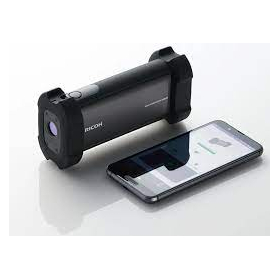
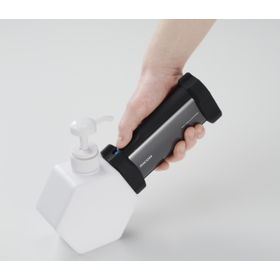
RICOH HANDY PLASTIC SENSOR B150

Even if you are operating for the first time, you can easily identify the resin! With various functions and settings, the sorting process is highly efficient.

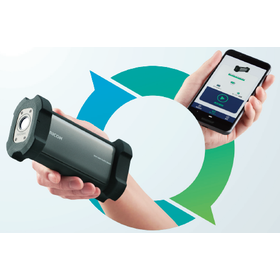
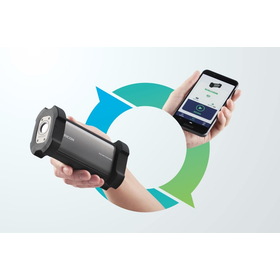
The "RICOH HANDY PLASTIC SENSOR B150" is a handheld resin identification sensor that allows for the speedy and easy differentiation of various types of plastics. It achieves a lightweight and compact size that can be handled with one hand. Since resin identification can be performed on-site, it contributes to an efficient workflow by eliminating the need to take samples back. Once the power is turned on, simply place the resin you want to identify against the measurement area and press the measurement button. We have pursued a simple operability so that many people can easily use it. 【Features】 ■ Compact and always portable ■ Simple operability that is easy for beginners and experts alike ■ Wireless connection with smartphones ■ Application that informs results via voice and screen ■ Selection of identification model data to improve resin identification efficiency *For more details, please refer to the PDF document or feel free to contact us.

  • Other resource recycling
  • Collection and transportation
  • Handy Sensor

Added to bookmarks

Bookmarks list

Bookmark has been removed

Bookmarks list

You can't add any more bookmarks

By registering as a member, you can increase the number of bookmarks you can save and organize them with labels.

Free membership registration

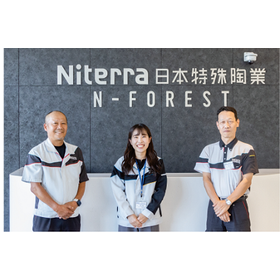
[Case Study] Successful "Monetization" of Waste Plastics through Sensor Utilization! Japan Special Ceramics Co., Ltd.

The introduction of the RICOH handheld sensor has successfully converted about 20% of waste plastic into "valuable materials."

We would like to introduce a case study of the introduction of the "RICOH Resin Identification Handheld Sensor" at Nippon Tokushu Tōgyō Co., Ltd. At the company's Komaki plant, 111 tons of waste plastic are generated annually, and until now, thermal recycling has been conducted. However, the company has decided to aim for the monetization of waste plastic. After the introduction of the RICOH handheld sensor, it became possible to accurately sort materials, allowing for the monetization of 20 tons of waste plastic out of the 111 tons. 【Previous Challenges】 - The company aimed to transition from thermal recycling of 111 tons of waste plastic to monetization. - To have recyclers accept the materials at a value, sorting by material type is necessary, but manual sorting has its limitations. - There was a lack of awareness about sorting waste that could be monetized among the production staff, necessitating a change in mindset across various production departments. *For more details, please refer to the PDF document or feel free to contact us. ★ Webinar Announcement! ★ We will also hold a webinar introducing other case studies. For more details, please refer to the related link or feel free to contact us. Date: December 11 (Wednesday) from 15:00 to 15:50 Participation fee: Free

  • img01.png
  • Other resource recycling
  • Other analytical equipment
  • Environmental Survey
  • Handy Sensor

Added to bookmarks

Bookmarks list

Bookmark has been removed

Bookmarks list

You can't add any more bookmarks

By registering as a member, you can increase the number of bookmarks you can save and organize them with labels.

Free membership registration

Material identification at recycling sites

If anyone can identify items at the recycling site, we can increase personnel and expand processing capacity!

We would like to introduce the utilization proposal for the "Resin Identification Handy Sensor" that we handle. It is effective for challenges such as "We cannot increase personnel because technical skills are required" and "We use external organizations due to a lack of know-how in material identification." Even amateurs can identify materials, which reduces inspection costs and labor hours. In addition to skilled workers, we can increase personnel, allowing for an increase in handling volume. 【Overview】 ■ Challenges - Use of external organizations due to lack of know-how in material identification - Identification is not possible for anyone other than skilled workers ■ Solutions - Reduction of inspection costs and labor hours - Ability to increase handling volume by adding personnel in addition to skilled workers *For more details, please refer to the PDF document or feel free to contact us.

Added to bookmarks

Bookmarks list

Bookmark has been removed

Bookmarks list

You can't add any more bookmarks

By registering as a member, you can increase the number of bookmarks you can save and organize them with labels.

Free membership registration

Simplification of resin material analysis for competitor product analysis.

If we can analyze competitor products in a short cycle, it will expand business opportunities and new ventures!

We would like to introduce the application of our "Resin Identification Handy Sensor." In-house and simplified analysis of competitor products. Reducing analysis costs and man-hours, enabling speedy analysis of resin materials. It allows for easy inspection and prevents unnecessary costs from arising. Please feel free to contact us when you need assistance. 【Overview】 ■Issue: Analyzing resin materials using FT-IR and DSC incurs high costs and man-hours. ■Solution - Speedy analysis of resin materials. - Easy inspection of competitor products, preventing unnecessary costs. *For more details, please refer to the PDF document or feel free to contact us.

  • Other analytical equipment
  • Non-destructive testing
  • Handy Sensor

Added to bookmarks

Bookmarks list

Bookmark has been removed

Bookmarks list

You can't add any more bookmarks

By registering as a member, you can increase the number of bookmarks you can save and organize them with labels.

Free membership registration

How about capturing the hearts of the younger generation through experiential environmental learning utilizing technology?

Learn actively and joyfully so that you can apply it to your daily actions! Here are some suggestions for utilizing our sensors.

We would like to introduce the utilization proposal for the "Resin Identification Handy Sensor" that we handle. It is effective for challenges such as "environmental learning centered on lectures feels distant" and "board writing and slides tend to lead to one-sided lectures." By holding the sensor and experiencing sorting, knowledge acquisition is accelerated. Awareness of the reality that recyclable materials are being discarded and the ease of sorting due to technological advancements will increase consciousness towards environmental conservation. 【Overview】 ■Challenges - Environmental learning centered on lectures feels distant - Board writing and slides tend to lead to one-sided lectures ■Solutions - Accelerated knowledge acquisition - Increased awareness of environmental conservation *For more details, please refer to the PDF materials or feel free to contact us.

Added to bookmarks

Bookmarks list

Bookmark has been removed

Bookmarks list

You can't add any more bookmarks

By registering as a member, you can increase the number of bookmarks you can save and organize them with labels.

Free membership registration

The resin identification handheld sensor contributes to quality control in food manufacturing sites!

Check the plastic material in 2 seconds! You can respond smoothly to foreign matter contamination issues!

We would like to introduce the application of the "Resin Identification Handy Sensor" that we handle. It is effective for challenges such as "wanting to understand the materials used in equipment that comply with HACCP" and "external inspection agencies cannot identify materials non-destructively." Since it allows for non-destructive identification of materials in food manufacturing equipment, it enables reliable quality control. 【Overview】 ■ Challenge: Unable to identify plastic materials of existing equipment ■ Solution - On-site material identification - Quality control capability - Reduction of inspection outsourcing costs *For more details, please refer to the PDF document or feel free to contact us.

  • others
  • Handy Sensor

Added to bookmarks

Bookmarks list

Bookmark has been removed

Bookmarks list

You can't add any more bookmarks

By registering as a member, you can increase the number of bookmarks you can save and organize them with labels.

Free membership registration